Leadership isn’t imposed.
It is cultivated by the NAME.
Forming healthy, self-sustaining local leaders through Relational Mentoring.
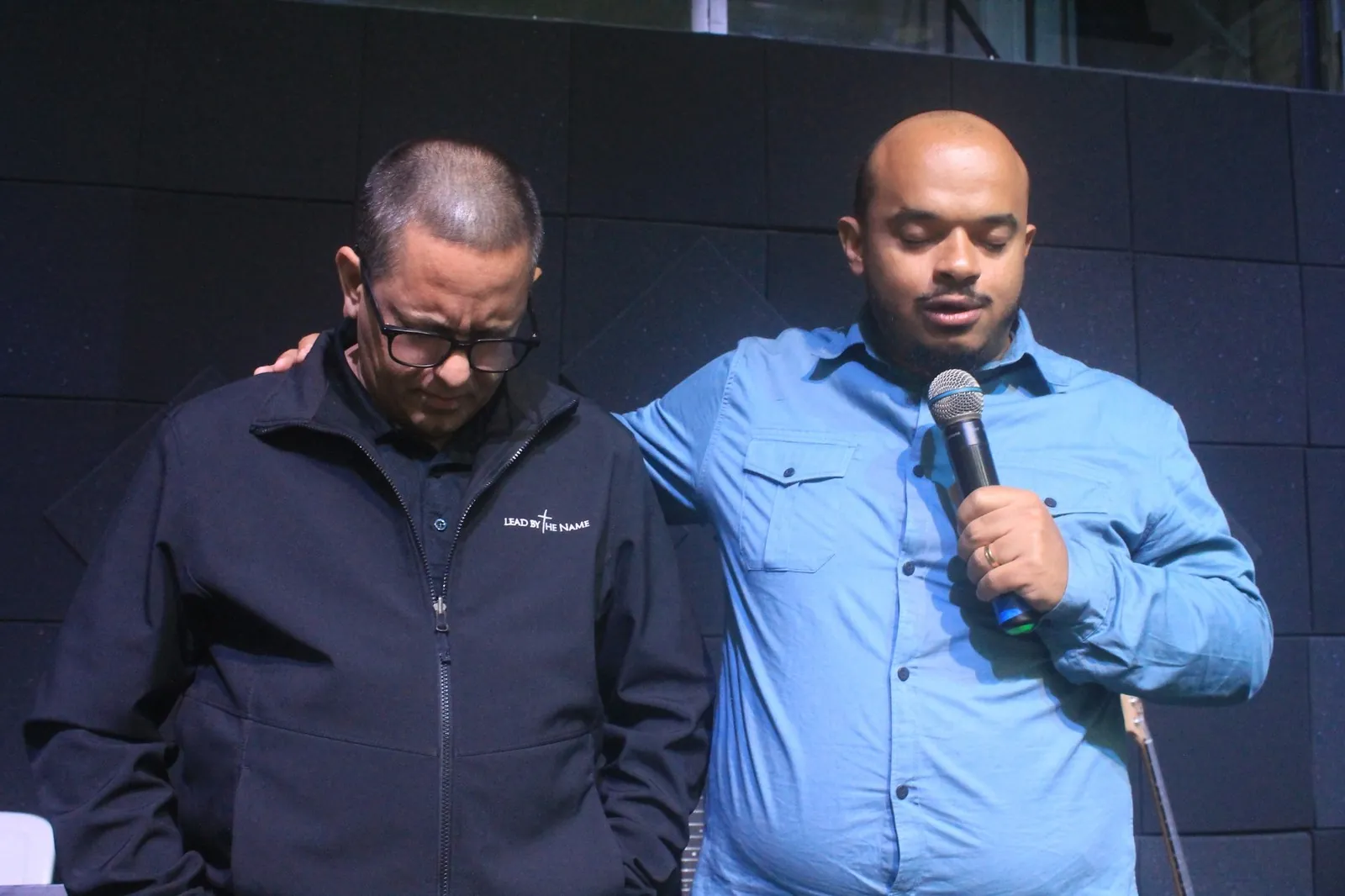
Relational Mentoring
The mentor here works to become unnecessary. It is mutual discipleship, grounded in Jesus’ leadership model and the ELLF Journey. Mentor and mentee walk side by side, the one who mentors does not stand above, and the relationship is guided by humility and dependence on God.
Success is measured by the day the local leader walks without them. That is why the mentor listens and learns before lifting and supporting, and why the role is temporary on purpose.
A journey of mutual discipleship
Relational Mentoring is mutual discipleship, in the model of Jesus.
Foundations that sustain every relationship
Humility
In practice, we value local knowledge and culture. The mentor does not have all the answers.
Dependence
In practice, we recognize that real growth comes from the vine.
Purpose
In practice, every action is aimed at the expansion and transformation of the Kingdom.
The ELLF Journey: 8 movements, four trainable pairs
The method within the relationship
The ELLF Journey (Empowering Local Leadership Framework) is the method within the relationship. “Local” does not confine the method to the culture of the one who mentors; the structure serves any leader, in their own culture or in a different one, because it does not carry ready-made content from one context to another. What crosses borders are the questions, and the answers are born of those who live there.
We learn the eight movements in four pairs. Eight isolated items require consultation; four pairs are trainable.
Listen and learn (Listen and Learn)
Understand the reality and recognize what already exists in it.
What have I not yet understood about your reality?
What strengths already exist here that I can learn from?
James 1:19Lift and level (Lift and Level)
Affirm the gifts of the other and walk alongside them as a brother.
How can we make this decision together, as brothers?
Galatians 3:28Lend and link (Lend and Link)
Lend resources with a deadline and open doors.
What can I lend you today so that tomorrow you walk on your own?
1 Peter 4:10Lean and lead (Lean and Lead)
Recognize that we also learn from the mentee and hand them the lead.
How will you lead the next step?
Mark 10:43The conceptual signature is the inversion of power
Conventional mentoring models are one-directional. The experienced teaches, the inexperienced learns, and the hierarchy remains intact. Three ELLF movements deliberately break this. Level (the mentor abandons the hierarchical posture and co-creates the solutions), Lean (allows themselves to be vulnerable and asks the mentee how they should act), and Lend (the return date is embedded in the question itself, preventing by construction that the loan becomes dependency). This is not the personal style of the one who mentors; it is in the structure.
We measure our success by the mentor’s growing dispensability. Empowerment, not assistance. Models that export solutions create dependency; ELLF celebrates when the mentee walks alone.
The THRIV Framework, the structure of the path
THRIV is, first of all, a word that means to prosper, to flourish, to progress, to grow. It is not about completing stages; it is about flourishing.
Each THRIV cycle has five phases, which are individualized onboarding, holistic initial assessment, personalized mentoring plan, regular biweekly practice, and verified final assessment. Structure is not bureaucracy; it is a score. No one accuses a sonata of being bureaucratic for being written down, and no musician confuses the score with the music. In bureaucracy, the person serves the process; here, the process serves the person.
The deliverables matter because they make mentoring auditable. A church board, a denominational director, or a donor can verify that the cycle happened, because there is a completed profile, a plan signed by both, session records, and a final assessment revisiting every goal. Good intentions cannot be verified; documents can.
Personalization by the mentee’s season
It would be a contradiction to defend personalization and apply the same design to a church planter in their first year and to a pastor with thirty years in transition. The plan varies according to four seasons. Of season, not of age or years in office.
The question that reveals the season is a single one. What does this leader most need now, structure, sustainability, understanding, or succession?
Initiation
needs structure, habits, boundaries, and character foundations. Typical cycle of 6 to 12 months.
Greater weight on Lift and Level
Consolidation
needs to delegate and sustain their own pace, to learn to stop doing it alone.
Greater weight on Lend and Link
Transition
needs to understand what is happening before deciding.
Greater weight on Listen and Learn
Multiplication
needs to form trainers and move into the mentor role.
Greater weight on Lean and Lead
What adapts and what is not touched
Without this distinction, exporting a model becomes imposing a model, which is exactly what the Learn movement exists to prevent.
Invariants
The Christ-centered core; ethics and safeguards; the logic of empowerment without dependency; personalization.
Adaptable
The cadence of meetings; in-person, online, or hybrid format; the language of the forms; illustrations and the relative emphasis among the movements.
When entering a new context, the procedure is to listen to local leaders before proposing, run a pilot cycle with a few pairs, and only then train and certify mentors from that context. Whoever certifies before listening repeats, in the structure, the error the method corrects in the relationship.
Mentoring that respects limits
Mentoring is not therapy, clinical counseling, or financial or legal advice; the limits of the role are explicit. A referral protocol covers risk situations (severe burnout, suicidal ideation, abuse, chemical dependency), with immediate communication to our official referral network. Conflicts of interest and dual relationships are declared and managed.
And when a relationship does not prosper, we close it with method, which is an open conversation without blaming either party, an assessment for reassignment, a record of what was learned, and an open door for a future return. Ending well what did not work is part of the method, not its failure.
How we think about Kingdom development
Principles that guide every mentoring relationship and every decision we make.
Empowerment
You are empowered from who you already are. The starting point is your identity and your context, never an outside model. Your leadership grows from the inside out, honoring what God has formed in you.
Sustainability
You are equipped to build solutions that emerge from your own reality, with faithful stewardship of the resources God has placed in your hands. Here, we build to last, not to impress.
True Ownership
Your voice drives the process. You are an agent, and your decisions shape the path. In the Body of Christ, every member is valuable; none is expendable.
Two-Way Street
You transform your mentor just as much as he or she transforms you. It is mutual discipleship. No one comes with all the answers, and both leave changed — wiser, humbler, more like Christ.
PROGRAM PHILOSOPHY
Relational mentoring is rooted in the belief that leading by the name, with character and purpose, is the highest form of influence.
The program is not transactional mentoring; it is a covenant relationship where mentors walk alongside mentees to develop the whole leader.
Process
The mentee submits an application with goals, background, and availability.
Application reviewed by the Relational Mentoring Director.
Matching process. The mentee’s goals are aligned with the certified mentor’s skills, sector, and availability.
Introductory session. Mentor and mentee meet to confirm fit and set expectations.
Launch of regular sessions — recurring cadence (biweekly recommended).
Needs discovery. The mentor records recurring themes, challenges, and opportunities from the sessions.
Progress tracked against goals; success milestones recorded quarterly.
Periodic check-in by the Relational Mentoring Director to ensure the health of the relationship.
Session insights shared with the pipeline to shape PEC and PGP.
What Our Mentees Say
Pastor Mendes’s mentoring represents God’s loving provision during a critical time in my ministry. Beyond listening carefully, he shares the wisdom he has gained over his long Christian and ministerial journey, with biblical application that deeply touches my heart. Every conversation encouraged me, guided me, and renewed my strength.
Mentoring has been a gift from God in my pastoral journey. At 69, after decades serving with love and simplicity, I am deeply grateful for the opportunity to be mentored by an experienced pastor. Every conversation is a rich exchange of experiences, learning, and mutual encouragement. It is not one teaching the other, but walking together — listening, reflecting, and seeking to serve the Kingdom better.
Lead by the Name has been a true reference point in my life. I am grateful to God for the opportunity to be mentored by an experienced pastor, whose guidance has been essential to my growth as a leader. The organic model, grounded in deep and wise conversations, has brought clarity, encouragement, and balance to my journey.
Mentoring has been a tremendous blessing in my life. I have already begun to see the fruit from the very beginning. Knowing that I can count on someone who listens to me, prays for me, and guides me with wisdom has been a true comfort to my heart.
The one-on-one mentoring program and organizational development at Lead by the Name were essential in helping me organize my thoughts and vision. I felt challenged and encouraged to move forward with God’s vision.
All of this is in the book
Mentoria Relacional: O Poder da Personalização na Liderança Cristocêntrica, by Antonio Mendes Gonçales and Eduardo Mendes, in a revised edition with 15 chapters, is the base book of our training. Each certification module is mapped chapter by chapter to the work, and 18 of our official forms are reproduced in the appendix.
See publications →